Download Corporate Calendar 2027 Download

 11 minutes
  In today's rapidly evolving technological landscape, artificial intelligence (AI) has become a cornerstone of modern business operations. One of the most exciting frontiers in AI is communication technology, which enables machines to understand and respond to human language with near-human accuracy. This capability transforms the way businesses interact with their customers, streamlining processes and enhancing user experience.
AI-driven communication technologies are not only reshaping customer service but also revolutionizing marketing strategies and product development. As more organizations integrate these solutions into their workflows, understanding how AI communicates has become imperative for staying ahead of the competition. In this article, we delve deep into various techniques that make AI communication effective, engaging, and indispensable.
At the heart of AI's ability to understand human speech lies natural language processing (NLP). NLP involves the use of machine learning algorithms to interpret text or voice input in a manner similar to how humans comprehend language. This technology enables machines to recognize different dialects, slang terms, and even idiomatic expressions, making interactions more fluid and natural.
One key application of NLP is sentiment analysis, which allows AI systems to gauge emotions from textual data such as social media posts or customer reviews. By understanding the underlying sentiments in these texts, businesses can tailor their responses accordingly, improving customer satisfaction rates significantly.
NLP has numerous applications that greatly benefit user experience (UX). Chatbots powered by NLP can engage users with conversational interfaces that mimic real human conversations. These bots are equipped to handle complex queries and provide personalized solutions based on past interactions. For instance, a customer seeking information about product features or service plans receives tailored advice rather than generic responses.
Moreover, voice assistants like Amazon's Alexa and Google Assistant rely heavily on NLP for their functionality. Users can ask questions about recipes, set reminders, control smart home devices, among other tasks, all through natural speech commands processed by sophisticated NLP algorithms.
As AI continues to advance, the possibilities with NLP expand as well. Emerging trends such as deep learning and neural networks are pushing the boundaries of what machines can achieve in understanding context and nuance within language. This development means that future iterations of AI communication will be even more sophisticated, capable of discerning subtle differences between similar phrases and adapting responses accordingly.
 Conversational UIs represent a paradigm shift from traditional graphical user interfaces by enabling direct interaction through text or voice commands. These interfaces allow users to communicate naturally with digital systems without having to navigate menus or buttons, thus providing an intuitive experience that aligns closely with human communication norms.
A prominent example of conversational UIs is chatbots, which have become ubiquitous across various industries due to their ability to handle customer inquiries efficiently. When integrated into websites or messaging platforms like Facebook Messenger, these bots act as virtual representatives capable of addressing a wide range of user queries automatically.
Chatbots offer several advantages over human agents:
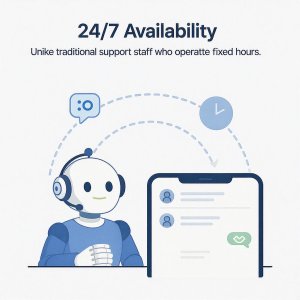
24/7 Availability: Unlike traditional support staff who operate within fixed hours, chatbots are always available to assist users at any time.
Scalability: They can handle multiple conversations simultaneously without compromising response quality.
Cost Efficiency: Deploying a chatbot reduces the need for extensive human workforce, thereby cutting operational costs significantly.
Personalization: Advanced AI algorithms enable bots to remember past interactions and preferences of individual users, delivering customized recommendations and support tailored specifically for them.
While text-based interfaces remain popular, voice assistants represent a growing trend in conversational UIs. These devices allow hands-free operation via simple vocal commands, making it convenient for users to interact with digital systems while multitasking or during activities that require manual engagement elsewhere.
Modern voice assistants come equipped with several features designed to improve usability and effectiveness:
Context Awareness: They can maintain contextual information about ongoing tasks, enabling seamless transitions between different actions.
Multi-modal Interaction: Some advanced models support both text and voice input/output, allowing users greater flexibility in how they interact.
Skill Integration: Users can expand functionality by adding third-party skills or apps that extend the assistant's capabilities beyond basic functionalities.
Conversational UIs play a crucial role in modern customer service strategies. By providing round-the-clock support and personalized assistance, they help businesses build stronger connections with their audience while reducing operational overhead. Additionally, data gathered through these interactions can inform product improvements and marketing efforts, contributing to overall business growth.
Personalization is key to engaging users effectively in today’s crowded marketplace. With the advent of sophisticated AI communication technologies, personalizing digital experiences has become both more feasible and essential than ever before. This section explores how businesses can leverage these tools to tailor content, offers, and interactions according to individual user preferences.
The foundation of effective personalized communication lies in collecting and analyzing comprehensive data about each user. By tracking behaviors such as browsing history, purchase patterns, social media activity, and demographic information, companies gain valuable insights into what drives engagement and satisfaction among their audience.
When implementing data-driven personalization strategies, it is crucial to adhere to ethical guidelines and ensure transparency with users regarding how collected information will be used. Clear privacy policies and consent forms should always be provided to build trust and maintain compliance with legal standards like GDPR or CCPA.
Once sufficient user data has been gathered, the next step involves using this knowledge to create customized content and offers that resonate personally with each individual customer. This could manifest in targeted email campaigns featuring products based on past purchases or personalized product recommendations suggested during web browsing sessions.
Dynamic content adaptation refers to adjusting webpage elements such as images, text blocks, and call-to-action buttons according to specific user profiles viewed through their digital footprint. For example, an e-commerce site might display featured items relevant to a visitor's previous searches or show promotions aligned with their purchase history.
Beyond merely presenting relevant content, personalizing interactions themselves adds another layer of depth to the customer experience. This includes addressing users by name within chatbot conversations, tailoring greetings according to preferred language settings, and offering bespoke solutions based on historical interactions recorded in CRM systems.
Several companies have successfully implemented personalized interaction models, resulting in significant improvements across key performance indicators (KPIs). One notable example is Netflix's recommendation engine, which utilizes complex algorithms to suggest movies and TV shows tailored specifically for individual tastes. Studies show that this approach has led to higher user retention rates compared to generic recommendations.
To gauge the effectiveness of personalization efforts, businesses must monitor specific metrics indicative of engagement levels and satisfaction scores. Common KPIs include click-through rates on personalized emails, conversion ratios for targeted ads, and average session duration on sites featuring dynamic content adaptations.
Numerous tools exist to help companies track these analytics efficiently:
Google Analytics: Provides detailed insights into user behavior across websites.
Customer Relationship Management (CRM) Software: Enables tracking of customer interactions and preferences over time, feeding back into personalization strategies dynamically.
A/B Testing Platforms: Facilitate experimentation with different personalized approaches to determine which yields optimal results.
By integrating these technologies alongside robust data collection practices, organizations can continuously refine their personalization techniques for maximum impact on user experiences.
As AI communication technology advances, it becomes increasingly important to address ethical concerns associated with its deployment. Issues such as privacy protection, bias prevention, transparency in algorithms, and the need for human oversight must be carefully considered by businesses aiming to incorporate these solutions into their operations effectively.
A primary concern when leveraging user data through AI communication systems is safeguarding individual privacy rights. It is essential to establish clear policies outlining how collected information will be used, stored securely against unauthorized access, and protected from breaches that could compromise sensitive details like personal identifiers or financial records.
Businesses must also comply strictly with existing regulatory frameworks governing data usage in their respective jurisdictions. For instance, adhering to GDPR requirements in Europe mandates obtaining explicit consent before processing any personally identifiable information (PII).
Another critical aspect of ethical AI communication involves mitigating potential biases embedded within training datasets that could lead to discriminatory outcomes when deployed at scale. This necessitates continuous monitoring and auditing mechanisms designed to detect unfair treatment patterns early on.
Effective strategies include diversifying dataset sources, incorporating fairness criteria during model development stages, and engaging multidisciplinary teams comprising experts from fields like ethics, sociology, and psychology alongside technical specialists.
Transparency builds trust between organizations deploying AI communication technologies and their stakeholders. Companies should strive to explain underlying mechanisms behind decision-making processes clearly to avoid confusion or suspicion arising due to perceived opacity.
Several tools aid in achieving greater transparency:
Explainable AI (XAI): Provides clearer explanations of model predictions compared to traditional black-box approaches.
Audit Logs: Track changes made to system configurations over time, facilitating accountability and traceability.
Despite advancements in automation, human intervention remains indispensable for ensuring ethical standards are upheld consistently throughout the lifecycle of AI communication projects. This includes regular reviews by ethics committees or advisory boards tasked with evaluating new applications against established principles and guidelines.
Finding the right balance between relying on automated systems and conducting periodic manual checks ensures that emerging risks are identified swiftly before they escalate into major issues impacting end-users adversely.
Looking ahead, several trends are poised to shape future developments within the realm of AI communication. These include advancements in natural language understanding, integration with Internet-of-Things (IoT) devices, and greater emphasis on emotional intelligence in digital interactions.
Natural Language Understanding (NLU) refers to a subfield focusing specifically on comprehending semantic meaning behind linguistic inputs beyond mere syntactic structures. As research progresses, we can expect more refined models capable of discerning nuanced contexts within conversations, thereby enabling richer dialogues between humans and machines.
Enhanced NLU translates directly into improved UX through reduced misinterpretations leading to frustration or confusion among users interacting with AI-driven interfaces.
As connectivity expands beyond smartphones and computers towards everyday objects like appliances and wearables, opportunities arise for seamless interaction experiences across multiple devices unified under a single intelligent ecosystem controlled via voice commands or natural text inputs processed by robust NLP engines.
Home automation represents one promising area where integration with IoT could significantly enhance daily convenience. Users might control lighting, temperature settings, security systems etc., effortlessly through verbal requests understood perfectly by resident AI assistants designed specifically for residential environments.
Another frontier involves developing algorithms capable of detecting emotional states from textual or vocal cues accurately, allowing AI communicators to respond appropriately considering prevailing sentiments rather than just factual content alone.
In customer service scenarios, recognizing frustration early through sentiment analysis allows agents (human or digital) to intervene proactively with soothing responses aimed at calming down agitated clients and restoring positive rapport rapidly.
As businesses increasingly turn towards leveraging advanced AI communication techniques to stay competitive in today's tech-driven world, embracing these innovations responsibly becomes paramount. By focusing on enhancing user experience through natural language processing, conversational UIs, and personalization while addressing ethical concerns around privacy, bias, transparency, and human oversight, organizations can build robust digital presences that resonate deeply with modern audiences seeking intelligent yet empathetic interactions online.


https://www.cbs.com.sg/mastering-the-art-of-ai-communication-techniques-and-strategies-for-seamless-interaction/
copy

