Download Corporate Calendar 2027 Download

Download Corporate Calendar 2027 Download
 11 minutes
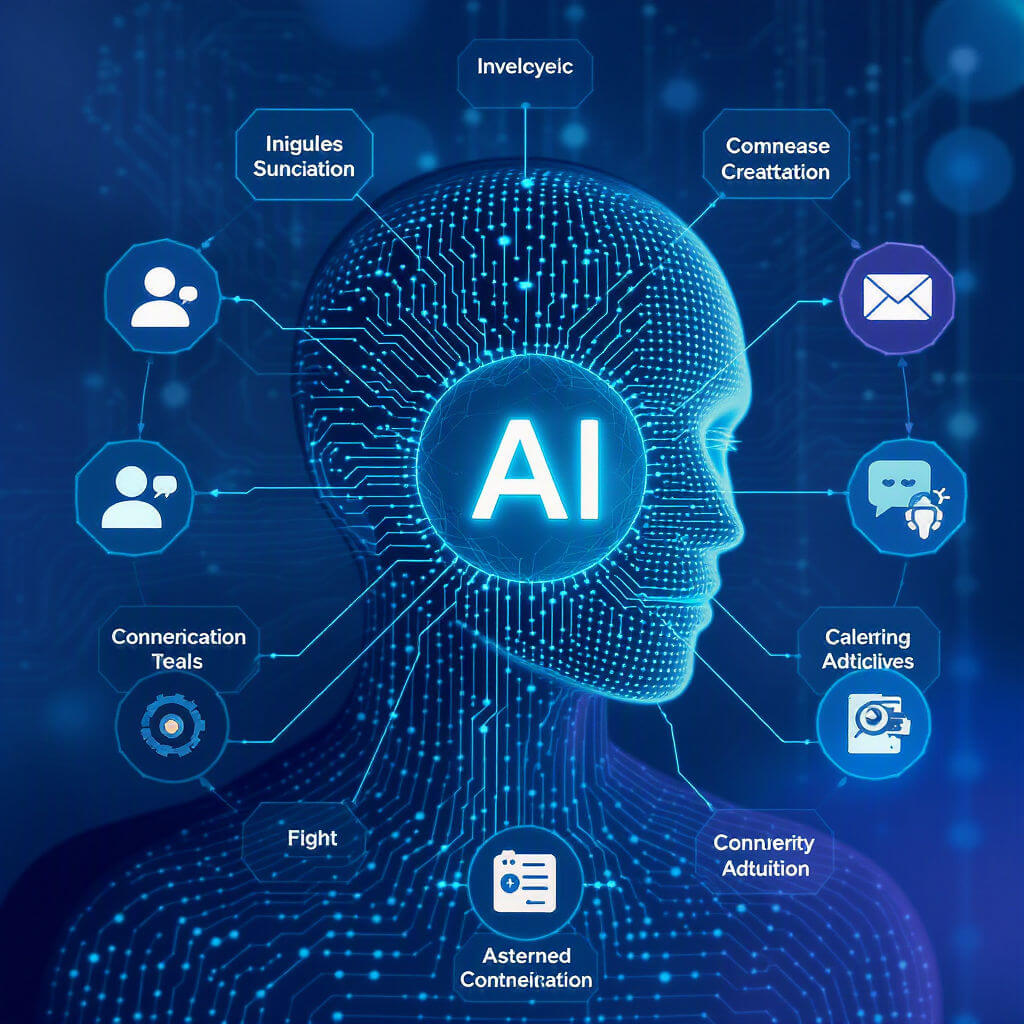
 In an era dominated by rapid technological advancements, Artificial Intelligence (AI) has emerged as a powerful force transforming the landscape of human interaction. AI technology is fundamentally altering how we communicate across various domains—personal, professional, and business-related. From chatbots that engage with customers 24/7 to sophisticated natural language processing systems that understand complex queries, AI-driven communication tools are becoming indispensable.
This article delves into the multifaceted role of AI in communication, exploring its applications, benefits, and potential future implications. We will discuss how chatbots, virtual assistants, natural language processing, and other AI technologies are revolutionizing not only customer service but also marketing strategies, content creation, and more. By understanding these advancements, you can harness the power of AI to enhance your communication channels and stay ahead in today’s digital age.
#### Early Beginnings: Simple Automations
The journey of AI in communication began with simple automation tools that could handle repetitive tasks. Early chatbots like ELIZA, developed in the 1960s by Joseph Weizenbaum at MIT, laid the groundwork for more sophisticated interactions. These early systems relied on keyword recognition and pattern matching to respond to user inputs.
#### The Rise of Machine Learning
In the late 20th century, machine learning algorithms began to transform how AI could interact with humans. With
these advancements, chatbots like Microsoft’s Tay were created, which demonstrated the potential for more natural language processing (NLP) interactions. However, they also highlighted the need for robust training and monitoring to prevent unintended consequences.
#### Modern Era: Advanced NLP and Natural Language Generation
Today, AI-driven communication tools leverage advanced NLP techniques such as deep learning, neural networks, and contextual understanding. These technologies enable chatbots and virtual assistants to engage in more human-like conversations, understand context, and provide personalized responses. For instance, Google’s Duplex, an AI assistant capable of making phone calls that sound nearly indistinguishable from a real person, exemplifies the current state-of-the-art in conversational AI.
#### Future Trends: Personalized and Adaptive Communication
Looking ahead, AI is poised to further revolutionize communication by personalizing interactions even more.
Adaptive learning algorithms will enable chatbots and virtual assistants to continuously improve their responses based on user feedback, making conversations increasingly relevant and engaging. Furthermore, advancements in speech recognition and synthesis technologies promise even smoother voice-based interactions.
#### Customer Service: Chatbots and Virtual Assistants
One of the most significant areas where AI is transforming communication is customer service. Chatbots are now capable of handling a wide range of tasks, from answering simple queries to providing complex solutions. Companies like IBM’s Watson Assistant and Salesforce’s Einstein can process natural language inputs and offer appropriateresponses or actions.
– **Real-time Support**: Chatbots can provide instant support to customers 24/7, offering quick answers to common questions.
– **Complex Problem Solving**: Advanced chatbots use machine learning models to understand the context of queries and provide accurate solutions. For example, a travel booking platform might use AI to assist with flight cancellations or schedule changes.
– **Personalization**: Chatbots can be trained on user data to offer personalized recommendations based on past interactions and preferences.
#### Marketing: Personalized Campaigns and Content
AI-driven communication tools are also revolutionizing marketing strategies by enabling more personalized and targeted campaigns. By analyzing vast amounts of customer data, AI systems can identify patterns and tailor communications to individual users.
– **Content Generation**: Natural Language Processing (NLP) and Generative Pre-trained Transformers (GPT) can create compelling content such as blog posts, social media updates, and product descriptions.
– **Behavioral Analysis**: AI algorithms can track user behavior across multiple platforms to predict preferences and deliver relevant advertisements or offers. For example, an e-commerce site might recommend products based on browsing history and purchase patterns.
– **Lead Generation**: AI-powered chatbots can engage with potential customers, gather information, and qualify leads before passing them to sales teams.
#### Sales: Enhanced Engagement and Conversion
AI technology is also making a significant impact in the realm of sales by improving engagement strategies and increasing conversion rates.
– **Predictive Analytics**: AI models can analyze customer data to predict buying behavior and identify high-value prospects. This information helps sales teams prioritize their efforts more effectively.
– **Dynamic Pricing**: AI algorithms can adjust pricing based on real-time market conditions, demand, and customer preferences, leading to better deals and higher conversion rates.
– **Personalized Offers**: Chatbots and virtual assistants can provide personalized offers and recommendations that align with the customer’s interests and needs.
#### Healthcare: Telemedicine and Patient Engagement
In healthcare, AI is transforming communication by enhancing patient engagement and improving access to medical services.
– **Telemedicine**: Virtual assistants and chatbots can assist patients in scheduling appointments, answering health-related questions, and providing reminders for medication or follow-up visits.
– **Wearable Data Analysis**: AI-driven systems can analyze data from wearable devices to monitor patient health and provide timely interventions. For instance, an AI-powered app might alert a doctor if it detects unusual heart rate patterns in a patient.
– **Mental Health Support**: AI chatbots are being used to provide emotional support and engage with individuals suffering from mental health issues, offering guidance and resources.
#### Enhanced Efficiency
AI technology significantly improves efficiency by automating routine tasks. This allows human agents to focus on more complex or critical issues that require their expertise. For example, a chatbot can handle basic customer queries while a human agent addresses high-priority cases.
#### Improved Accuracy and Consistency
AI-driven communication tools are designed to process vast amounts of data quickly and accurately. They minimize errors by continuously learning from user interactions and adapting to new information. This ensures that
responses are consistent across different channels and users.
#### Personalization and Scalability
One of the key advantages of AI in communication is its ability to provide personalized experiences at scale. Chatbots can tailor their responses based on individual user preferences, making conversations more relevant and engaging. Additionally, these tools can handle multiple interactions simultaneously without sacrificing quality, ensuring seamless scalability.
#### Cost Reduction
By automating routine tasks and handling a high volume of queries efficiently, AI-driven communication systems help reduce operational costs. This is particularly beneficial for businesses with large customer bases or frequent service requests.
While the benefits are clear, there are also challenges and ethical considerations that need to be addressed as AI continues to play a larger role in communication.
#### Data Privacy Concerns
The collection and analysis of vast amounts of data raise significant privacy concerns. Companies must ensure they comply with data protection regulations such as GDPR and CCPA while implementing robust security measures to protect user information.
– **Data Encryption**: Encrypting sensitive data both at rest and in transit ensures that even if data is intercepted, it remains unreadable.
– **Consent Management**: Obtaining explicit consent from users for data collection and usage helps build trust and compliance with regulatory requirements.
#### Bias and Fairness
AI systems can inherit biases present in the training data. This can lead to unfair or discriminatory outcomes if not carefully managed. It is crucial to ensure that AI models are tested rigorously for bias and continuallmonitored for fairness.- **Diverse Data Sets**: Collecting diverse and representative datasets helps mitigate bias during model training.
– **Continuous Monitoring**: Implementing mechanisms to monitor and correct biases in real-time ensures ongoing fairness.
#### User Experience
While AI can enhance communication, there is a risk that overly automated systems might negatively impact user experience if not designed with human interaction in mind. Ensuring seamless integration between AI-driven tools and human agents is key to maintaining a positive user experience.
– **Human-AI Collaboration**: Designing interfaces that allow for easy switching between AI-driven and human-based interactions can improve overall satisfaction.
– **User Feedback Loops**: Incorporating feedback mechanisms ensures that users can report issues or provide suggestions, helping to continuously refine the AI system.

#### Customer Service Example: Chatbot for a Retail Giant
A large retail company implemented a chatbot powered by AI to handle customer service inquiries. The chatbot wastrained on historical data and could answer common questions about product availability, pricing, and store locations. For more complex issues, the chatbot would escalate the conversation to a human agent.
– **Results**: Within six months of deployment, the chatbot handled over 70% of all customer service inquiries, significantly reducing wait times for customers and freeing up agents to focus on high-value tasks.
– **Impact**: The system improved customer satisfaction scores by 15%, leading to higher retention rates and positive word-of-mouth.
#### Marketing Example: Personalized Campaigns for a Leading E-commerce Platform An e-commerce platform used AI-driven chatbots to engage with potential customers and create personalized marketing campaigns. By analyzing user data, the chatbot could offer tailored recommendations based on browsing history and purchase patterns.
– **Results**: The system increased conversion rates by 20% compared to traditional marketing approaches.
– **Impact**: Personalized offers led to higher customer engagement and loyalty, resulting in a significant boost in sales and revenue.
#### Sales Example: Predictive Analytics for a Real Estate Firm
A real estate firm implemented AI-driven predictive analytics to identify high-value prospects and optimize their sales strategies. By analyzing data on past transactions, the system could predict which leads were most likely to convert into buyers.
– **Results**: The firm saw a 30% increase in closing deals within the first quarter of implementation.
– **Impact**: More accurate lead qualification helped streamline the sales process, reducing costs and improving overall efficiency.
As AI continues to evolve, its role in communication is likely to expand even further. Here are some potential future implications:
#### Seamless Integration with IoT Devices
With the increasing proliferation of Internet of Things (IoT) devices, AI-driven communication will become more integrated into everyday life. Smart home systems, wearable technology, and connected vehicles could all benefit from advanced AI capabilities.
– **Scenario**: A smart home system powered by AI could automatically adjust lighting and temperature based on user preferences or predict maintenance needs before they arise.
– **Impact**: Seamless integration enhances the overall user experience while providing valuable insights into consumer behavior.
#### Enhanced Natural Language Understanding
Advancements in natural language understanding will make interactions even more seamless. Systems like Google’s Duplex could become more adept at recognizing nuances and handling complex conversational scenarios.
– **Scenario**: A virtual assistant could handle intricate scheduling tasks, such as booking appointments with multiple parties who have conflicting schedules.
– **Impact**: Improved NLU capabilities will lead to more intuitive and natural interactions, further blurring the lines between human and machine communication.
#### AI in Cross-Cultural Communication
AI can play a crucial role in facilitating cross-cultural communication by understanding and adapting to different linguistic and cultural contexts. This could be particularly valuable for businesses operating globally or organizations serving diverse populations.
– **Scenario**: An AI-powered translation tool could assist users from different regions in communicating
effectively, breaking down language barriers.
– **Impact**: Enhanced cross-cultural communication can lead to better collaboration, increased market reach, and improved customer service experiences across various cultures.
### Conclusion: The Transformative Power of AI in Communication
AI technology is fundamentally reshaping the way we communicate, offering unparalleled opportunities for efficiency, personalization, and innovation. From chatbots and virtual assistants to advanced NLP systems, these tools are enhancing interactions across various domains—customer service, marketing, sales, healthcare, and beyond.
By understanding the benefits and challenges of AI in communication, businesses can leverage this technology to improve customer experiences, streamline operations, and gain a competitive edge. As AI continues to evolve, its potential applications will only grow, making it an indispensable tool for effective and adaptive communication in the digital age.

The journey towards fully integrating AI into communication is ongoing, but the benefits are clear. Companies that embrace this technology can expect significant improvements in efficiency, personalization, and overall customer satisfaction. However, it is essential to address ethical concerns and ensure responsible use of AI to maintain user trust and comply with regulatory requirements.
As we look to the future, the potential for AI-driven communication is vast. By staying informed about advancements and best practices, organizations can harness the power of AI to create more meaningful and effective interactions in an increasingly connected world.


