Download Corporate Calendar 2027 Download

 13 minutes
AI technology in communication has moved rapidly from simple auto-complete suggestions to complex generative systems capable of conducting multi-turn conversations, translating real-time dialogue, and drafting tailored executive messages. While organizational leaders and communication teams frequently focus on output speed and cost reduction, the true strategic impact of automated messaging depends on language nuances, recipient trust, and operational guardrails. We must evaluate how artificial intelligence transforms interpersonal dynamics, public messaging, and enterprise operations while maintaining authenticity and technical integrity.

• Key Takeaways
• The Core Mechanics of AI Technology in Communication
• Efficiency Versus Authenticity: The Hidden Dynamics of AI-Assisted Messages
• Navigating Communication Risks in Enterprise and Public Deployments
• Localization and Language Nuance: Testing Beyond Standard English
• Strategic Framework for Responsible AI Communication Deployment
• Frequently Asked Questions
• Sources and References
• Speed versus perception trade-off: Automated replies accelerate response times and increase positive emotional language, but suspected automation can significantly lower recipient trust and perceived authenticity.
• Holistic evaluation metrics: Measuring communication success requires looking beyond generation speed to evaluate emotional tone, cooperation levels, long-term relational closeness, and message clarity.
• Localization demands rigorous testing: Multilingual models must be benchmarked against informal dialects and localized varieties, such as Singlish and Taglish, rather than relying solely on standardized language benchmarks.
• Risk prioritization: Enterprise risks in automated communication extend beyond simple hallucination to include algorithmic bias, privacy breaches, malicious impersonation, and overreliance.
• Human-in-the-loop governance: One-way automated broadcasts and social listening offer immediate productivity gains, whereas complex community engagement requires active human oversight to maintain credibility.
To manage modern communication platforms effectively, we need to understand how underlying models process, transform, and output text and voice. AI technology in communication relies on an interconnected stack of natural language processing (NLP), large language models (LLMs), automatic speech recognition (ASR), and text-to-speech (TTS) engines.
At the core of generative communication systems lies the transformer architecture. Rather than analyzing text strictly word-by-word, transformer models evaluate relationships between all words in a sequence simultaneously using self-attention mechanisms. This architecture allows the model to capture context, infer tone, and maintain conversational coherence over multi-turn interactions.
According to a comprehensive synthesis from Frontiers in Communication, AI communication can increase speed, creativity, productivity, and the automation of monotonous tasks. By automating routine text generation, organizations shift administrative focus toward strategic reasoning and critical oversight.
Traditional conversational agents relied on explicit decision trees and keyword matching. When a user expressed a request outside pre-programmed parameters, the system failed. Generative models operate probabilistically, allowing them to interpret unstructured phrasing, ambiguous context, and complex customer inquiries.
Attribute | Traditional Rule-Based Systems | Modern Generative AI Systems |
|---|---|---|
Input Handling | Strict keyword matching and intent mapping | Natural, unstructured language interpretation |
Flexibility | Rigid decision tree pathways | Dynamic, context-aware dialogue generation |
Maintenance | Manual rule building for every interaction scenario | Fine-tuning and retrieval-augmented prompt management |
Scalability | High initial effort per new topic | Rapid adaptation via semantic domain models |
Error Profile | Fallback failure (“I did not understand that”) | Hallucination or subtle contextual misstatement |
Modern enterprise deployments rarely restrict AI systems to a single chat window. Automated communication flows across voice telephony, web chat, mobile messaging applications, and transactional email. Integrating these touchpoints requires centralized context storage so that an interaction initiated on a messaging app transitions smoothly to a voice call without losing conversational history.
In telephony channels, real-time voice processing introduces latency constraints. Latency above 800 milliseconds disrupts natural human conversation turn-taking. Achieving fluid voice interactions requires optimizing the latency pipeline across speech recognition, model inference, and text-to-speech synthesis.
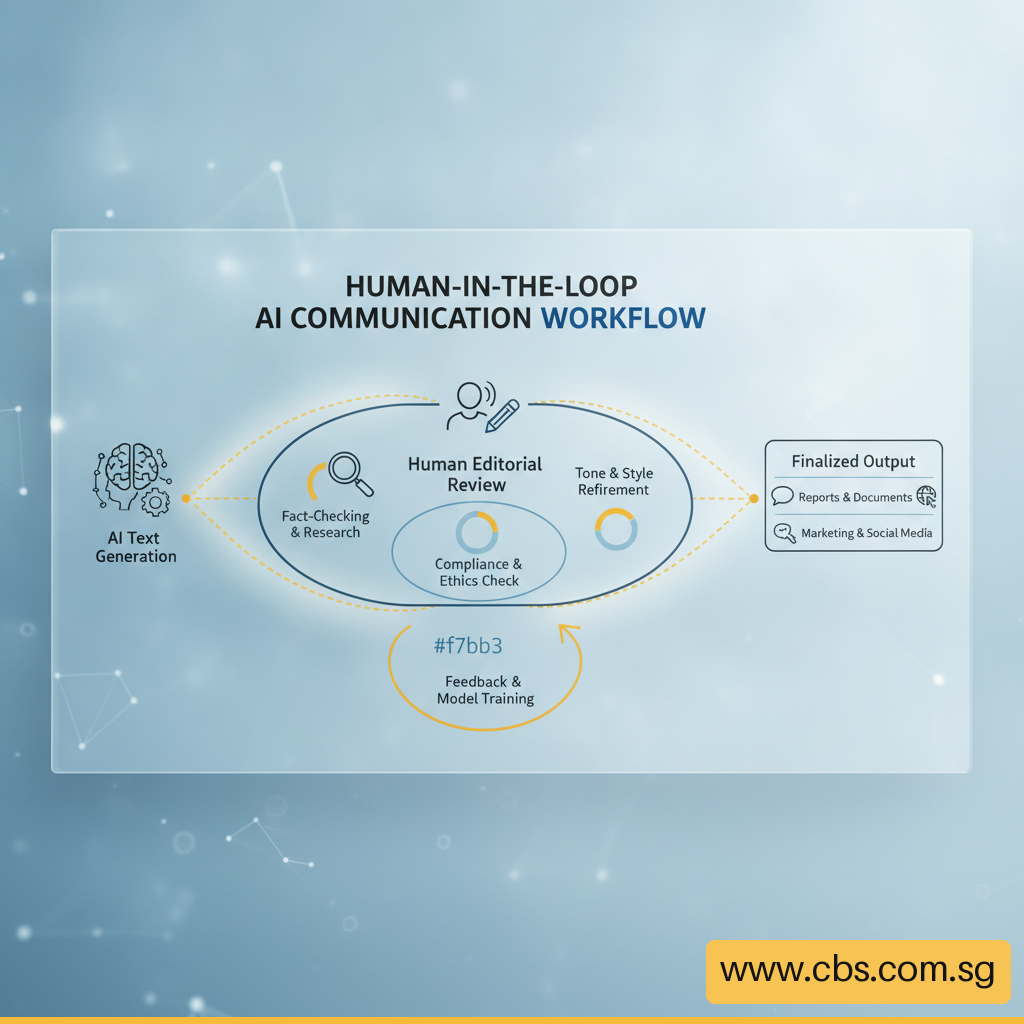
While automated drafting increases organizational output, deployment choices create trade-offs between processing speed and human connection. Communication is not merely information transfer; it is a social relational mechanism.
Organizations frequently select communication software based on clear efficiency metrics: turnaround time, handle time, and volume per hour. However, evaluating AI systems solely on throughput obscures critical social outcomes. We must measure performance using structural language indicators and interpersonal relationship metrics.
• Language Sentiment and Tone: Tracking shifts toward positive or defensive phrasing across customer cohorts.
• Cooperative Behavior: Evaluating whether AI-assisted exchanges increase mutual problem-solving or trigger partner friction.
• Relational Closeness: Assessing long-term trust and rapport between communicators following automated interactions.
• Perceived Sincerity: Monitoring how message recipients react when they detect standardized or synthesized phrasing.
According to controlled experimental findings published in Scientific Reports, AI-assisted communication can improve perceived closeness and cooperation while simultaneously creating concerns about authenticity. This dual effect demonstrates that while smart suggestions help users form positive phrasing faster, social dynamics become fragile if automation appears to replace genuine attention.
When message recipients suspect that a response was generated by an algorithm rather than crafted by a human, their evaluation of the sender changes. In controlled studies, including research on smart replies and interpersonal dynamics, participants who learned that their partner used automated suggestions rated their partner as less sincere and less empathetic, even when the generated message was polite and constructive.
This outcome presents a fundamental trust paradox: automated tools increase message politeness and response speed, yet suspicion of their use undermines personal connection. Further evidence detailed in a peer-reviewed study on communication behavior confirms that AI-assisted communication can improve perceived closeness and cooperation while simultaneously creating concerns about authenticity.
To balance productivity gains against potential loss of trust, organizations must design clear operational boundaries. High-stakes communication—such as executive correspondence, sensitive customer resolutions, and public safety announcements—requires a human-in-the-loop (HITL) architecture.
Deploying automated communication systems introduces organizational, legal, and operational risks. Managing these exposures requires systematic threat prioritization rather than ad-hoc troubleshooting.
Evaluating automated systems requires structured risk classification. Broad warnings about “AI errors” are insufficient for operational governance. Organizations should categorize risks by impact severity and mitigation complexity.
• Algorithmic Bias: Systematic differences in language evaluation or response quality that disadvantage specific demographic or cultural groups.
• Data Privacy Breaches: Unintentional disclosure of sensitive personal data or proprietary commercial details within generated text.
• Information Verification Failures: Fabrication of facts, inaccurate claims, or reference to non-existent policy terms presented with high confidence.
• Malicious Impersonation: Unauthorized reproduction of organizational voice, brand identity, or executive likeness for manipulative purposes.
• Systemic Overreliance: Organizational skill atrophy resulting from staff accepting model outputs without critical evaluation.
Not all public communication functions are equally suited for automation. Broadly speaking, automated systems excel at analyzing passive incoming communication and tailoring standardized outward messages. However, multi-party public engagement presents greater complexity.
According to a Delphi consensus study on responsible public communication, experts viewed tailored risk communication and social listening more favorably than AI-enabled community engagement. Passive analysis and localized message tailoring operate within constrained parameters, whereas community dialogue requires dynamic social reasoning, cultural nuance, and emotional adaptation that automated engines cannot consistently replicate.
An ongoing risk in generative systems involves data sourcing and training collection practices. Text posted on public forums, technical support communities, and digital media platforms is frequently harvested to train foundational language models. This creates two distinct operational challenges:
• Data Leakage Risk: Confidential information shared in enterprise forums may end up in public dataset scrapes and surface in model responses elsewhere.
• Copyright and Provenance Uncertainty: Content created by staff or contributors may be ingested without explicit licensing, raising long-term liability concerns around synthetic outputs.
Organizations must audit data sources used by third-party communication tools to ensure clear agreements exist regarding input retention and training boundaries.
Global AI platforms are predominantly pre-trained on standardized English datasets. Deploying these systems in regional operating environments, such as Singapore and broader Southeast Asia, requires dedicated localization testing.
In localized communication environments, standard grammar rules are frequently augmented by informal speech patterns, code-switching, and regional colloquialisms. In Singapore, for instance, everyday business and customer communication regularly incorporates Singlish—a localized English variety incorporating syntax and vocabulary from Mandarin, Malay, Hokkien, and Tamil.
When standard systems evaluate colloquial inputs, failure modes typically include:
• Intent Misinterpretation: Misinterpreting pragmatic particles (such as _lah_, _leh_, _lor_) as emotional hostility or formal sentiment markers.
• Over-Correction: Forcing highly formal standard English responses upon customers using informal channels, resulting in an unnatural brand tone.
• Translation Distortions: Misconstruing regional terminology during automated backend transcription or translation.
While vendor capability statements often claim comprehensive support for regional dialects and mixed language formats (such as Singlish or Taglish), practical system performance varies significantly across specific domain tasks.
Organizations evaluating commercial communication platforms must distinguish between high-level vendor claims and independently verified performance data. Vendor benchmarks often rely on standardized public datasets that do not reflect complex real-world workflows.
Evaluation Area | Vendor Claim Focus | Independent Operational Test Focus |
|---|---|---|
Accuracy | Standard grammar benchmarks (e.g., MMLU) | Contextual accuracy on actual customer logs |
Language Support | Total count of supported languages | Precision on local code-switching and slang |
Response Time | Isolated API benchmark latency | Full end-to-end user latency across live channels |
Safety & Moderation | Default toxic-word filtering | Resistance to domain-specific prompt injections |
User Trust | Total engagement volume | Longitudinal user satisfaction and sentiment retention |
AI technology in communication offers substantial accessibility benefits when implemented thoughtfully. Automatic speech recognition and real-time text-to-speech engine conversion assist users with auditory or visual impairments. However, accessibility system design must account for edge cases:
• Speech Diversity: Voice recognition algorithms must be tested against diverse vocal pitch, speech impediments, and non-native accents.
• Screen Reader Compatibility: Generative interface outputs must maintain structural Markdown formatting so screen readers parse headings, tables, and lists correctly.
• Cognitive Load Optimization: Automated text summaries must maintain clarity without stripping out necessary legal caveats or core instructions.
To successfully integrate AI technology in communication, organizations need a clear implementation framework that balances speed, risk management, and brand integrity.
Given the documented trust trade-offs associated with suspected automation, transparency is an operational necessity. Organizations must clearly define when and how AI involvement is disclosed to recipients.
Overreliance occurs when workers accept automated text outputs without validating facts or adjusting tone. Over time, this leads to skill degradation and severe message quality errors.
To mitigate overreliance, organizations should implement mandatory review protocols based on content risk tiers:
• Low-Risk Tiers (Internal meeting summaries, standard transactional confirmations): Fully automated or minimal light review.
• Medium-Risk Tiers (Standard customer support emails, general marketing copy): Human review required before dispatch.
• High-Risk Tiers (Crisis communications, regulatory disclosures, formal legal notices): Multi-stage human editing, factual verification, and senior sign-off required.
Before deploying an automated communication tool across enterprise channels, complete the following verification steps:
AI technology in communication refers to hardware and software systems—such as large language models, natural language processing engines, speech recognition tools, and sentiment analysis algorithms—that analyze, generate, translate, or automate text and voice interactions between humans or between humans and automated systems.
Modern AI chatbots convert incoming text into mathematical representations called tokens. Neural network transformer models analyze the relationships between these tokens to establish context and intent. The system then calculates the statistically most appropriate response based on its underlying training and configured system guidelines.
Traditional chatbots rely on strict rule-based decision trees and pre-written scripts, making them incapable of handling unexpected phrasing. Generative AI models create original text dynamically based on probabilistic reasoning, allowing them to interpret unstructured language, answer complex questions, and maintain context across long conversations.
It can. Research shows that while AI suggestions increase response speed and positive emotional language, recipients who suspect a message was generated by an algorithm often rate the sender as less sincere. Maintaining authenticity requires human-in-the-loop oversight to ensure phrasing reflects genuine empathy and personal intent.
Standard language models often struggle with informal regional dialects because their primary training data consists of standardized text. However, fine-tuning models on localized datasets enables them to parse Singlish syntax and vocabulary. Organizations operating in Singapore should explicitly test platforms against local speech logs before deployment.
Organizations can disclose AI involvement by adding clear conversational headers (e.g., “Virtual Assistant”), using contextual disclosures in email footers, or applying digital provenance metadata to public communications. Providing clear disclosure preserves trust and prevents negative recipient reactions if automation is later discovered.
An automated system should transfer an interaction to a human representative whenever the conversation involves high emotional distress, complex legal or financial risk, repeated failed intent resolution, or an explicit request from the user for human assistance.
Depending on vendor configuration, AI systems may log conversation transcripts, user metadata, voice recordings, IP addresses, and sentiment scores. Organizations must review vendor privacy policies to ensure user data is encrypted, retained only as long as necessary, and excluded from general model training datasets.


https://www.cbs.com.sg/ai-technology-in-communication-balancing-efficiency-trust-and-local-relevance/
copy

