Download Corporate Calendar 2027 Download

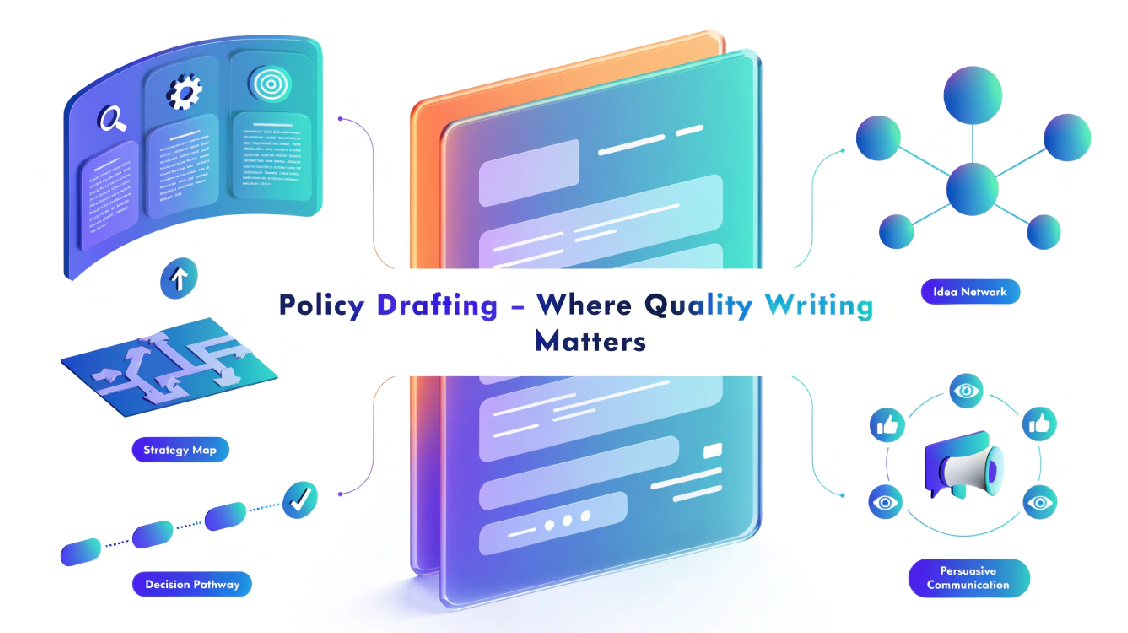
Writing a technical paper may not be easy but it is relatively straightforward because of a clear focus. Writing a report may be demanding but there is (usually) enough research data and information lying about to support a decent submission.
But writing a qualitative policy paper? Well, even for the best of staff writers (in government or major corporations), it is a tough task because there is neither a clarity of objective as afforded by a technical paper nor an abundance of evidence as supplied for a standard report. How worse, then, would it be for a young officer plying the trade of policy writing for the first time?
A policy draft, which can take the form of a strategy, doctrine or simply an uncharted brand new idea, is an arduous writing challenge because its objective may be unclear or multi-faceted; its direction may be ambivalent; and its content is devoid of quantitative support. The overworked policy writer has to summon her imagination, forward her qualitative arguments and sting with her persuasive summation just to get the attention of her approving authority. Skip a beat, and the whole argument is flawed. Burden it with details and the paper is deemed overloaded. Surely there is a (short cut?) way to write smart without writing hard?
Quality writing happens when you lack substantive data and factual evidence. You need to apply persuasion over precision. This is the heart of Policy Drafting.

Dr Sunny Goh is a Trainer of Trainers (TOT) and has taught many writing coaches to teach writing programmes. He was head of the International directorate in Mindef’s Defence Policy Office, where he has written Cab Memos, budget papers and presented Singapore’s position at international fora. He was a member of the SAF Scholars Selection Board and chairman of a university’s Resource Panel.
He was also a Desk Editor at The Straits Times, where he taught reporting and interviewing skills at its School of Journalism. In all, his participants had included CEOs, professors, staff writers, technical specialists, undergraduates and students. It doesn’t matter how high a participant’s work status may be – all that mattered is a penchant for learning.
As a volunteer, he was a Mediator with the Ministry of Law, a Council Member of the Singapore Red Cross Society and writes regularly for the local and regional media. He is currently a board director of five international firms where effective communication is essential to winning contracts, customers and confidence.


