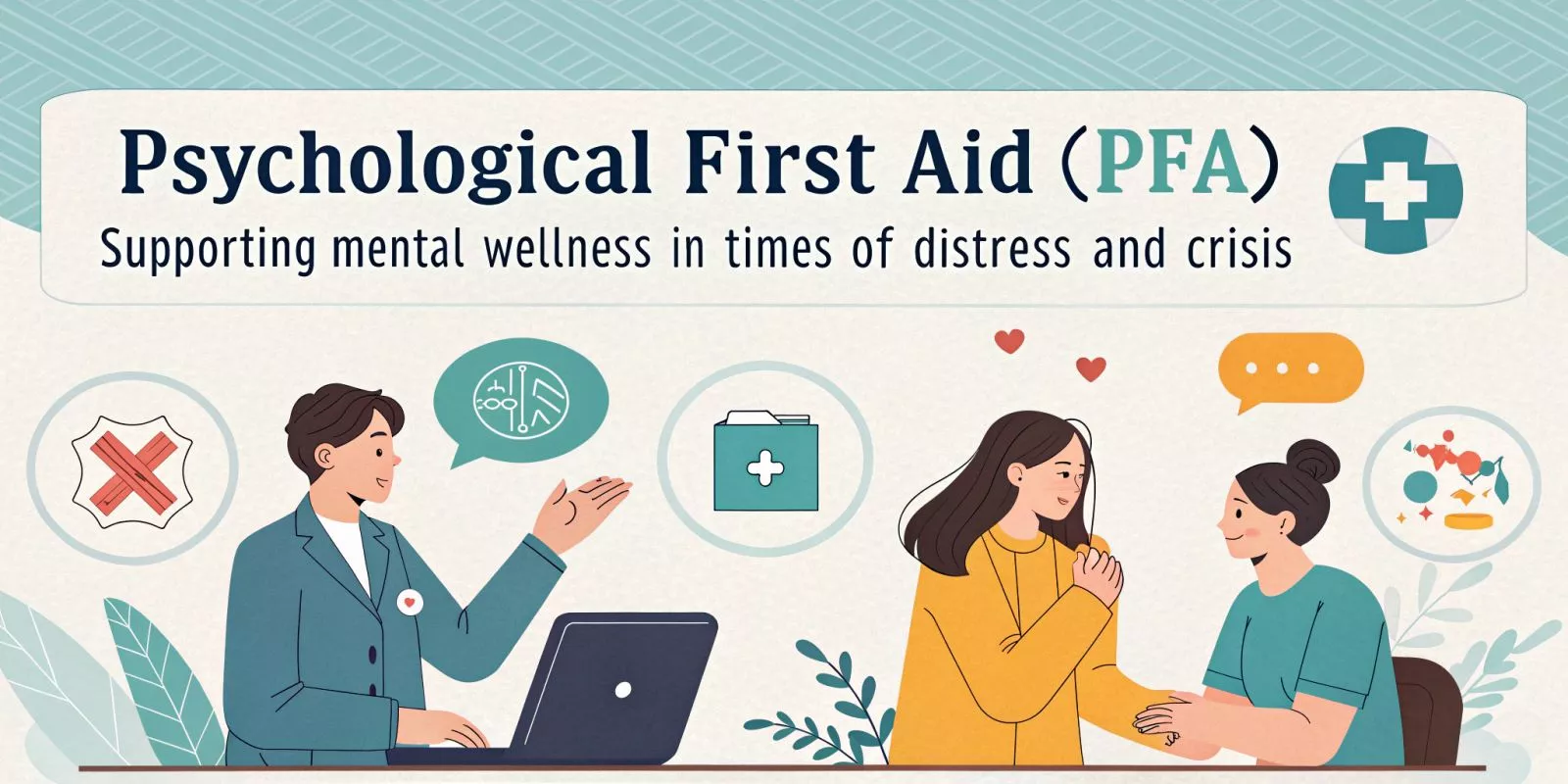
Psychological First Aid (PFA): Supporting Mental Wellness in Times of Distress and Crisis

Must-Have Tools and Skills for Psychological First Aid Success: Empowering You to Respond Effectively in Times of Mental Health Crisis


Welcome to Psychological First Aid (PFA) for Mental Wellness, a practical one-day training designed to equip you with essential tools and skills to support adults experiencing distress in personal, workplace, or crisis situations—whether man-made or natural.

Crises can overwhelm anyone’s ability to cope, making timely, compassionate support critical. PFA is not professional counselling, diagnosis, or therapy. It is a practical, humane approach that helps individuals feel safe, calm, connected, and hopeful while ensuring access to social, emotional, and physical support systems.

This workshop is ideal for anyone who may encounter emotionally challenging or crisis-related situations—whether with colleagues, clients, stakeholders, or even themselves. People respond to distress, anxiety, and low mood differently, depending on personal, social, and situational factors. Recognising immediate needs and responding in an empathetic, grounded, and effective way is therefore crucial.

Through this programme, participants will:
• Apply PFA principles to assess and respond to immediate needs.
• Use empathetic communication and active listening to stabilise distressed individuals.
• Provide practical support and comfort in the aftermath of a crisis.
• Guide individuals toward appropriate professional help when needed.

By the end of this workshop, you will have the must-have skills and confidence to make a meaningful difference in times of mental health distress, helping others—and yourself—navigate crisis with resilience and care.

Learning Outcomes

By the end of the workshop, participants will be able to:

  • Understand key concepts related to mental well-being, mental wellness, and mental illness, and clearly distinguish among them.
  • Recognise common signs, symptoms, and behavioural indicators of distress in adults.
  • Apply the 3 ‘L’ PFA Framework – Look, Listen, Link – to provide timely and supportive Psychological First Aid.
  • Use a practical vocabulary of supportive phrases and actions to comfort individuals experiencing distress or reduced mental well-being.
  • Develop a personalised PFA toolkit, including a set of open-ended, non-leading questions to explore emotions and needs safely and respectfully.
Course Outline

1) Understanding Crisis and Its Impact

  • Types of crises (personal, workplace, organisational, man-made, and natural)
  • Common emotional, behavioural, and cognitive reactions
  • Short-term vs. longer-term impacts

2) Mental Health and Wellness vs. Mental Illness

  • Key distinctions in a corporate context
  • Misconceptions and stigma reduction
  • When to refer to professionals

3) Key Concepts: Stress, Distress, and Burnout

  • How they differ and how they manifest
  • Early warning signs and risk factors
  • Implications for workplace functioning

4) Psychological First Aid (PFA): Core Principles and Action Steps

  • The 3 ‘L’ Framework: Look, Listen, Link
  • Essential dos and don’ts
  • Providing practical care without overstepping boundaries

5) Essential PFA Skills

  • Active listening and empathetic communication
  • Grounding and stabilisation skills
  • Clean language and effective questioning techniques

6) Application Through Role Play

  • Realistic workplace and client-facing scenarios
  • Practising the 3 ‘L’ framework
  • Receiving feedback for skill improvement

7) Closing Summary and Q&A

  • Consolidation of key learning points
  • Reflection and next steps
  • Additional resources and support avenues
Training Methodology
  • Series of presentation and discussion
  • Role plays of realistic case studies/scenarios
  • Interactive group activities
Who Should Attend
  • Professionals at all levels who are keen to provide psychological and emotional support in the workplace.
  • HR personnel, department heads, team leaders, supervisors, managers and anyone who is required to handle the crisis in the workplace.
  • Anyone who is keen to equip themselves with listening and empathic communication skills to provide emotional support to someone in distress.
Testimonials

“Anil is very experienced facilitator who walks the talk when it comes to mental wellness and performing PFA. He is able to present abstract concepts in lay language and provide practical examples and approaches for easy learning.”

“Although taking on the PFA role can be done by anyone, Anil ensured that he gave his learners the confidence to perform the role. I have learnt that the role of providing Psychological First Aid (PFA) isn’t about solving problems or giving solid solutions. The guidance to the three actions of look, listen and link is very useful for my application.”

“Subject content was relevant and useful. I benefited from Anil’s background knowledge of the subject and his vast experience in dealing and manging individuals with distress and burnout.

“The course was engaging and fun. In particular, the role-play, facilitation, and case studies/scenarios were useful to reinforce the learning.”

About The Trainer

Mr Anil Singh (Master of Social Sciences, NUS)

A person with short dark hair wearing a dark blazer and light shirt is smiling and posing with their right arm crossed over their chest against a plain light background.

Anil Singh – Expert in Mental Wellness and Crisis Management
(Master of Social Sciences, National University of Singapore)

Anil Singh is a Senior Associate Lecturer, Trainer, and Academic Coach with over 10 years of experience working in government and private institutions. A dedicated mental wellness advocate, Anil specializes in Psychology, Sociology, and Public Safety & Security. His expertise spans school, workplace, and community settings, where he empowers organizations and individuals to cultivate a culture of mental well-being.
Before transitioning to full-time lecturing, Anil served as a Community Outreach Manager at the National Addictions Management Service (NAMS), Institute of Mental Health (IMH), and as Executive Director at a community drug rehabilitation center. He holds a Master of Social Sciences from NUS, alongside certifications in adult education and professional counseling. With his deep knowledge and engaging teaching style, Anil equips participants with the skills and confidence to support mental wellness and navigate crises effectively.