Critical Thinking with Sun Tzu Art of War and Stratagems

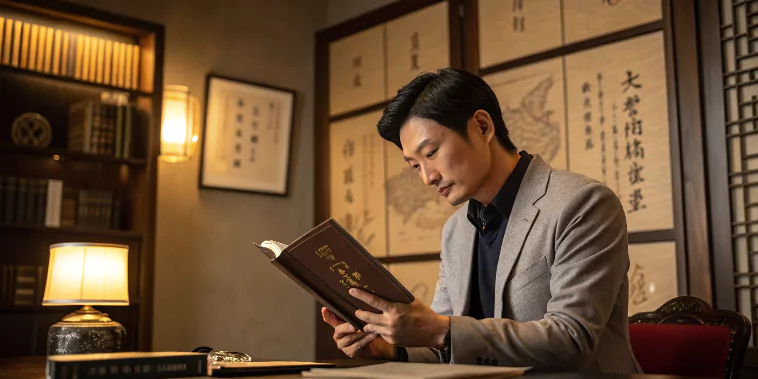
A man in a suit sits at a desk reading a book in a room decorated with traditional East Asian calligraphy and wooden shelves.

Applying Sun Tzu’s Art of War Strategies to Enhance Critical Thinking Skills

Workplaces keep changing, and critical thinking has become an essential skill for employees and leaders alike. When people think clearly and systematically, they make better decisions, solve problems more effectively and express ideas and solutions more persuasively. Becoming a good critical thinker takes the right mindset, thinking skills and strategies. With these, a person can assess any situation, anticipate what may happen, and find the solution that gives the best possible outcome.
Sun Tzu’s Art of War is a 2,500-year-old treatise of 13 chapters. It is a powerful metaphor for this kind of disciplined thinking. This workshop draws on its 6 Basic Concepts: Philosophy (道), Heaven (天), Ground (地), Leadership (将), Methods (法) and Force (队). Participants use these as a practical framework to examine themselves, their teams and their competitors before they act. They then use the Art of War’s key actions (foresight, foreknowledge, actioning and positioning) together with “Fire” and “Water” thinking to reduce the chance that decisions fail and to make hard decisions with the right momentum and timing.

The aim is to “out-manoeuvre” problems rather than fight them, and to connect modern critical-thinking practice with innovative and entrepreneurial thinking. As Sun Tzu said:

“For to win one hundred victories in one hundred battles is not the acme of skill. To subdue the enemy without fighting is the acme of skill.”

Course Objectives

By the end of the workshop, participants will be able to:

Part 1

  • Demonstrate strategic thinking skills: plan and calculate before acting.
  • Apply critical self-reflection and competitor analysis: “know the enemy and know yourself”.
  • Cultivate adaptive thinking and strategic response: act only when there is an advantage to be gained.

Part 2

  • Optimise resource management and decision timing: avoid long, draining campaigns and act at the right moment.
  • Use intelligence for decision-making: anticipate and counter using timely, relevant and accurate information.
Course Outline

Part 1: Foundations of Sun Tzu’s Art of War for Critical Thinking

Module 1: Introduction to Sun Tzu and the Art of Critical Thinking

  • Who was Sun Tzu? The 13 Chapters of the Art of War made easy
  • The meaning of “stratagem”: winning without conflict
  • What is thinking in modern day? (Dewey; Paul & Elder; Dunne)
  • Activity 1: What kind of thinker are you? Six thinking styles and a “Think Aloud” reflection

Module 2: The 6 Basic Concepts Framework

  • Philosophy (道), Heaven (天), Ground (地), Leadership (将), Methods (法) and Force (队)
  • Using the six concepts as a critical-thinking checklist for your organisation
  • Activity 2: Critical Thinking Readiness Rubric (Vulnerable, Tactical or Strategic Zone)

Part 2: Applying Sun Tzu to Critical Thinking and Decision-Making

Module 3: Critical Thinking in the Modern Context

  • Core skills, cognitive actions, mindset, logic, and evaluation tools
  • A formal definition of critical thinking: process, actions and outcome
  • Six situations that stop critical thinking, and how to overcome them
  • Bloom’s taxonomy: from evaluating to creating

Module 4: Winning with Minimum Conflict

  • Activity 3: The “Concubine Army” case study: clear command, accountability and the six concepts in action

Module 5: Defensive Strategy as the Essence of Critical Problem-Solving

  • Five factors of leadership in decision-making
  • Foresight (pre-emption), foreknowledge (preventing surprises), actioning (doing battle) and positioning (preventing siege)
  • Activity 4: Recap — linking the key actions to the 6-concept framework

Module 6: Strategy for Hard and Difficult Entrepreneurial Decisions

  • “Fire” thinking (calculated risk and momentum) and “Water” thinking (adaptability and agility)
  • Activity 4: Innovative thinking vs creative thinking (group breakout)
  • Entrepreneurial thinking: causation vs effectuation

Module 7: Movement to “Battle” — Momentum, Timing and Making Decisions to Win

  • Movement to “battle” strategy to implement workable entrepreneurial solutions
  • Using Sun Tzu’s “five fire attacks” as a lens for identifying and solving problems
  • Unity of forces, momentum and timing; the fundamentals of a decision-making team; ways to have better timing in decision-making
  • The Critical Thinking Sun Tzu Conceptual Framework and the entrepreneurial growth mindset
  • Take-away reflection: what to Start, Continue and Stop
Training Methodology

The workshop is highly interactive and experiential. Participants apply critical-thinking principles to Sun Tzu’s teachings and stratagems in a range of workplace contexts, through:

  • Short facilitated lectures that illustrate each idea with a Sun Tzu quote
  • Self-assessments: a thinking-styles profile and a Critical Thinking Readiness Rubric
  • Pair “Think Aloud” reflection and group breakout discussions
  • A historical case study (the “Concubine Army”) and group problem-solving exercises
  • A personal Start / Continue / Stop action plan
Who Should Attend
  • Executives, managers and team leaders who want to improve their decision-making, problem-solving and strategic thinking.
  • Professionals who want to grow personally and see the value of critical thinking in everyday work, decision-making and problem-solving, using strategies from Sun Tzu’s Art of War and its stratagems.
  • Anyone who wants to benefit from the strategic insights of Sun Tzu’s principles. The Art of War offers useful perspectives on competitive advantage, decision-making and leadership in the workplace.
Testimonials

– Knowledge and strategic is applicable to my real life
Heraeus Materials Singapore Pte Ltd

– Clear, Concise
– Interesting content and activities
– Related real life experience
Heraeus Materials Singapore Pte Ltd

– Very relevant process of critical thinking that can be apply to my work
– Good Learning material with example
– Give good example of case study
Singapore Institute of Technology

Good breakdown of material and explanation with relevant examples. On slides detailing what Sun Tzu said and its applications in business, trainer tended to elaborate a lot but it is slightly harder to follow as online half day training, this is the limitation
Nanyang Academy of Fine Arts

Had read some parts of Sun Tzu’s and practiced in my life and work. This workshop expounded on his theories which are very applicable to our constantly changing environment especially now
Nanyang Academy of Fine Arts

Trainer

CBS Master Trainer

a man sitting on a cube wearing glasses and a tan jacket.

Dr Alan Go is the Founder of RISE Education Management and an independent Strategic Education Consultant. He is also Strategic Consultant (Strategy and QA) with EduValue Pte Ltd, a board advisor and fractional leader to several private education institutions, and a Visiting Associate Professor at Xijing University, China.

A former Infantry Army Officer (Contract) with the Singapore Armed Forces, Dr Go has over 25 years of experience in regional senior management, entrepreneurship, training and education. He has held senior roles including Marketing Director, Regional Marketing and Sales Director, Group Vice President – Business Development, Managing Director and CEO. These roles spanned the M.I.C.E., information technology, internet technology, financial services BPO, and education and training sectors. He co-founded a corporate training and events business and founded and partnered two companies in the credit management sector. From 2010 to 2019 he worked at a regional Private Education Institution, rising from marketing and lecturing to Academic Director, Deputy CEO, CEO Singapore and COO (Asia), overseeing the Singapore and Vietnam campuses.

Dr Go is often engaged as a speaker and trainer. He has conducted many seminars, conferences and corporate in-house training programmes across Singapore and the Asia region on leadership, entrepreneurship, strategic planning, marketing and personal branding. He mentors executives in entrepreneurial, design and critical thinking. He is a proponent of Blue Ocean Strategy and of Sun Tzu’s Art of War and is known for turning concepts into practical application. His speaking engagements include the Global Entrepreneurship Summit (Kuala Lumpur), the Education Investor Asia Summit (Singapore, keynote) and the Future Leader Congress at the United Nations Conference Centre, Bangkok.

Qualifications: Doctorate of Business Administration (DBA), Universidad Católica San Antonio de Murcia, Spain; Master of Business Administration (International Business), Edith Cowan University, Australia (top 15% of cohort); Bachelor of Arts (Distinction) in Journalism (Major: Advertising, Minor: Business), University of Oklahoma, USA; WSQ Advanced Certificate in Training and Assessment (ACTA); WSQ Diploma in Adult and Continuing Education (DACE).